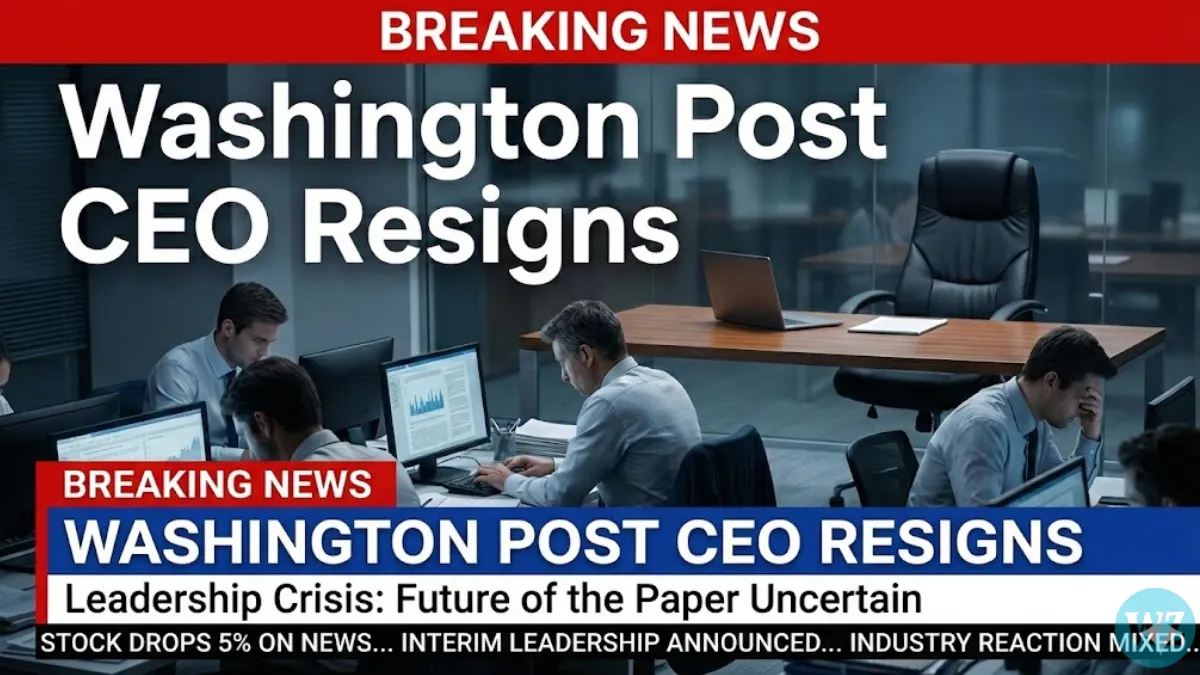
The Washington Post is facing renewed scrutiny after its CEO stepped down following widespread criticism over leadership conduct during a major round of layoffs. The resignation comes after reports that the CEO was largely absent during a critical period when hundreds of employees were impacted by cost-cutting measures.
The development has intensified conversations around leadership accountability, newsroom morale, and the growing financial pressures facing legacy media organizations in the digital age.
Leadership Absence Sparks Backlash
According to internal accounts and media reports, the CEO was reportedly unreachable for extended periods while the company was implementing significant job cuts. Employees and industry observers questioned the lack of visible leadership at a time when transparency and communication were most needed.
Being “AWOL” during layoffs not only damaged internal trust but also raised concerns among readers and media analysts about governance and crisis management at one of America’s most influential newspapers.
Impact on Employees and Newsroom Culture
The layoffs, which affected multiple departments, were part of a broader effort to control costs amid declining digital subscriptions and advertising revenue. However, the absence of senior leadership reportedly deepened frustration among staff, many of whom were already grappling with job insecurity and heavier workloads.
Several journalists and media professionals took to social platforms to voice concerns about morale, leadership responsibility, and the future direction of the organization.
Washington Post Under Financial Pressure
Like many traditional news outlets, The Washington Post has been navigating a challenging media landscape shaped by:
- Falling digital subscription growth
- Reduced online advertising revenue
- Increased competition from social platforms and independent creators
- Rising operational costs
These pressures have forced major media companies to rethink staffing, business models, and leadership structures.
Resignation Signals Shift in Strategy
The CEO’s resignation is widely seen as an attempt to stabilize the organization and restore confidence among employees and stakeholders. Industry experts suggest the move could pave the way for new leadership focused on rebuilding trust, improving communication, and adapting to changing audience habits.
The Washington Post’s ownership has not ruled out restructuring at the executive level as the company reassesses its long-term strategy.
Broader Implications for the Media Industry
This episode highlights a growing trend across global media organizations: leadership visibility matters more than ever during periods of uncertainty. Analysts argue that transparent decision-making and hands-on leadership are now essential for maintaining credibility both inside and outside the newsroom.
As media companies continue to downsize and restructure, similar leadership challenges may emerge elsewhere in the industry.
What Comes Next for The Washington Post?
While the company has yet to announce a permanent replacement, attention is now focused on how new leadership will address employee concerns, financial sustainability, and editorial independence.
For readers, the situation serves as a reminder of the pressures shaping modern journalism—and the importance of responsible leadership in preserving trusted news institutions.